






Promoting good psychosocial working environments
Each year on 28 April, World Day for Safety and Health at Work reminds us that safe work goes beyond physical hazards. With this year’s theme, Promoting Good Psychosocial Environments, the focus is firmly on protecting mental health at work and the role employers play in this.
At ReturnToWorkSA, we support South Australian businesses to create mentally healthy, safe and productive workplaces recognising that psychosocial safety is as important as physical safety.
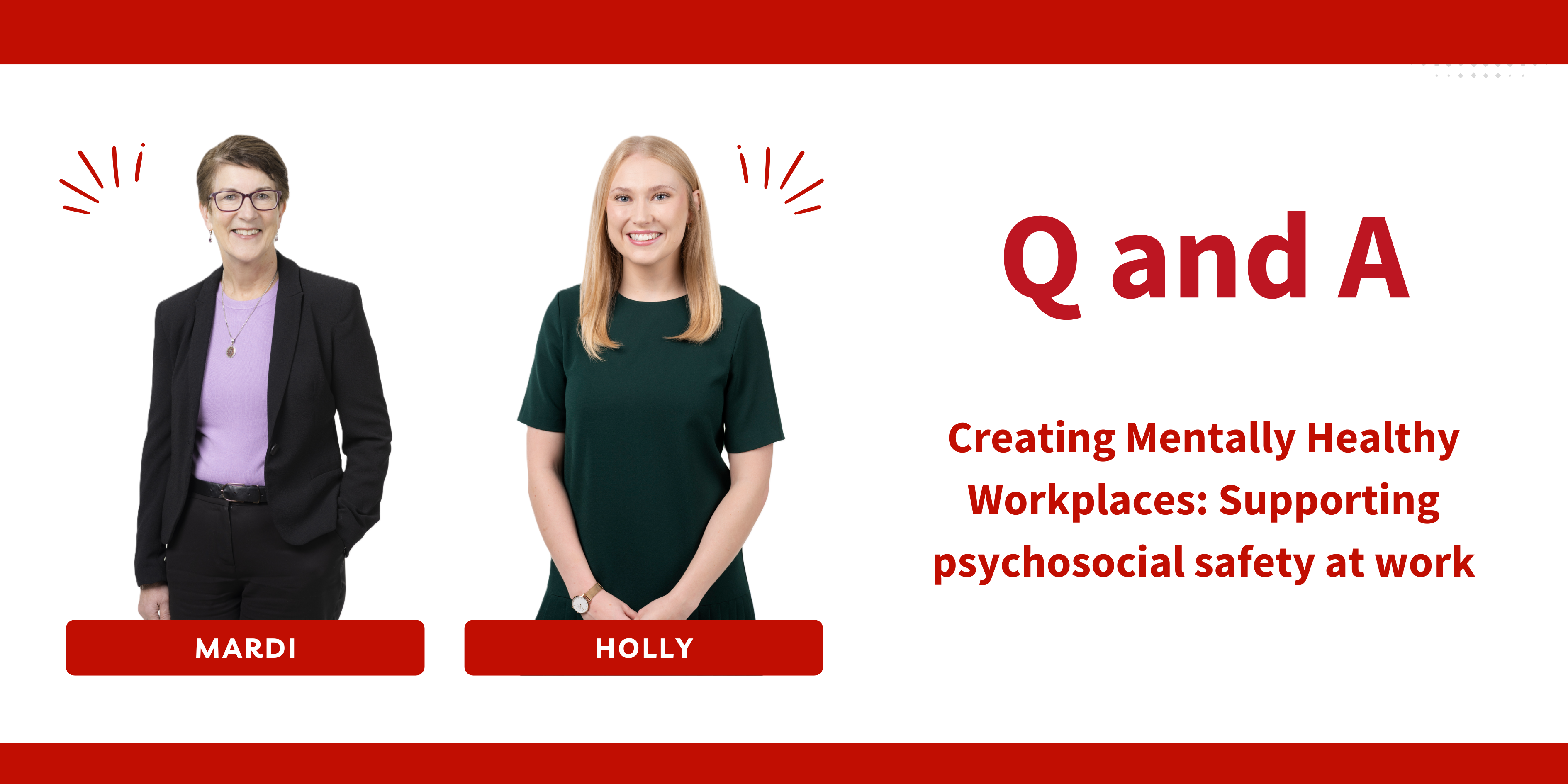
Through our Mentally Healthy Workplaces Service, we help employers build environments where people can thrive. As part of World Day for Safety and Health at Work, our Mentally Healthy Workplaces Consultants, Mardi and Holly, share expert insight into psychosocial health and safety and what it means in practice for workplaces across South Australia.
Q: What is a psychosocial work environment?
A psychosocial work environment includes the psychological and social aspects of work that influence how people experience their job. This can include workload and pace, role clarity, job security, leadership support, autonomy, and exposure to harmful behaviours.
When these factors are well managed, they support mental health, engagement and productivity. When they’re poorly managed, they can increase the risk of work-related stress, burnout and psychological injury.
Q: Why is psychosocial health such a strong focus for workplace health and safety now?
Psychological injuries make up a growing proportion of serious workers’ compensation claims and are often associated with longer recovery times and significant impacts on both individuals and workplaces.
In South Australia, this focus has been strengthened through the introduction of the approved Code of Practice: Managing Psychosocial Hazards at Work, which came into effect in February 2026.
The Code provides practical guidance for employers on how to identify, assess and control psychosocial hazards—reinforcing that psychological health must be managed in the same way as physical health under work health and safety laws.
This shift reflects a broader recognition that good work design and safe systems of work prevent harm before it occurs.
Q: What are psychosocial hazards?
Psychosocial hazards are aspects of work that can cause psychological harm if not managed appropriately. Examples include:
- excessive workloads or unreasonable deadline
- poor support from supervisors or colleagues
- low job control or lack of flexibility
- low role clarity or conflicting expectations
- workplace bullying, harassment or aggression
- poorly managed organisational change
These hazards often build up over time and rarely occur in isolation, which is why prevention and early identification are essential.
Q: What does a good psychosocial environment look like?
A good psychosocial environment is about creating fair, supportive and well‑designed work. It’s a psychologically safe place where workers feel able to raise issues, concerns or ideas without fear of stigma, discrimination or punishment.
Best practice focuses on prevention through elimination, early intervention and long‑term cultural change, rather than only responding once problems arise.
Crucially, it involves treating workers as trusted partners in the process—they play a key role in identifying risks and helping to find practical solutions.
Q: What practical steps can employers take?
There are many practical ways employers can strengthen psychosocial health and safety, including:
- Consulting with workers: Listening to and consulting with workers about what helps or hinders their wellbeing is not only a legislative requirement—it also makes practical sense.
- Building mental health knowledge across the organisation: Helping managers and workers understand their roles and responsibilities in creating a positive psychosocial work environment leads to improved mental health and wellbeing overall.
- Identifying and assessing psychosocial hazards: As outlined in the Code of Practice, employers should follow the four‑step risk management approach (identify, assess, control and review), consulting with workers at every stage.
- Improving work design and systems: Addressing sources of stress by reviewing workload allocation, role clarity and how organisational change is planned and communicated.
- Building leadership capability: Supporting managers to recognise risks, have meaningful conversations and build psychological safety within their teams.
Q: How does ReturnToWorkSA’s Mentally Healthy Workplaces Service support employers?
The Mentally Healthy Workplaces Service supports organisations across South Australia to build sustainable, mentally healthy work environments that meet both legislative obligations and workforce needs.
Support available includes:
Regular skill‑building workshops, including online webinars on psychosocial risk management and in‑person workshops to build internal capability around safety and wellbeing.
- Subscribe to our workshop notifications so you never miss a session
Free online learning modules, including:
Managing workplace psychological injury guide – a Guide for employers, Return to Work Coordinators and managers.
Free tools and practical resources are available on our Preventing Psychological Harm webpage
If you’d like support in building a mentally healthy workplace, contact the Mentally Healthy Workplaces Service at mentallyhealthy@rtwsa.com
 Date printed: 16 Oct 2026

